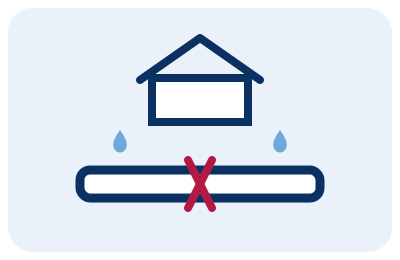
Multiple fixtures slow or backing up at the same time. Here's what to do about main drain clogs in New York City — including the local factors that change the advice.
Do this right now
Confirm the pattern
Run water in an upstairs sink and watch the lowest drain. If the low drain reacts, the blockage is in the main line between them.
Stop adding water
Limit water use — every gallon has to go somewhere, and right now 'somewhere' is your lowest drain.
Find your cleanout
The main-line cleanout (usually a capped pipe near the house or in the yard) is where a pro will work. Knowing its location speeds everything up.
Don't chemical it
Chemical cleaners can't clear main-line clogs and make the line hazardous for the pro with the auger.
Call for pro clearing
Call (844) 699-1165. Main lines need a powered auger or hydro-jetting — and a camera inspection to find why it clogged.
Main Drain Clog in New York City? Talk to a local pro now.
Free for homeowners · 24/7 · Licensed local pros
What makes main drain clogs different in New York City
- pre-war buildings, brownstones, and co-op/condo towers — much of it a century old — the pipe materials used in this era determine your root and scale risk.
- Basements and century-old service lines; shared building systems everywhere — soil movement here can belly or separate older lines.
- In New York City, deep winter freezes, nor'easters, and humid summers
- Co-op and condo rules often require building approval and licensed pros; lead service lines are still being replaced across the boroughs
Neighborhoods
If you're in Upper West Side, Park Slope, Astoria, Harlem, Flushing, Bay Ridge, Forest Hills, Washington Heights, Williamsburg, Jamaica, or anywhere across the New York City metro — Manhattan, Brooklyn, Queens, The Bronx, Staten Island — the steps above apply. Call (844) 699-1165 and mention your neighborhood so we match you with a pro who knows the area.
What to tell the pro when you call
- Which fixtures are affected and in what order they back up
- Whether there's an accessible cleanout and where
- The home's age and pipe material if known
- Whether this has happened before
- Any large trees near the sewer line route
Not quite your problem?
| Only one fixture affected | Clogged drain — local fix in New York City → |
| Actual sewage coming up | Sewer backup — urgent in New York City → |
| Toilet only, everything else fine | Clogged toilet in New York City → |
Main Drain Clog in New York City — FAQs
Are main line clogs common in New York City?
Do I need hydro-jetting or just snaking in New York City?
What's the difference between a drain clog and a main line clog?
How do plumbers clear main lines?
More New York City plumbing guides
Main Water Shutoff Valve
You don't know where your main shutoff is (most common 'symptom').